
Red pimples and inflamed acne can make anyone feel uncomfortable and self-conscious about themselves. Even if your pimple is small, the redness around it often makes it look bigger and more noticeable. Many people search for ways to calm their skin quickly and safely.
Many people search for safe and quick ways to calm their skin and reduce inflammation. If you have ever wondered how to get rid of redness from pimples and acne, you are not alone. Acne is one of the most common skin conditions worldwide, affecting nearly 85% of people between the ages of 12 and 24 according to the American Academy of Dermatology studies.
This blog will help you to understand the causes, treatments, home remedies, and long-term habits that will reduce redness and keep your skin calm.
This blog is written in simple, clear language, so anyone can follow it. It focuses on practical steps that will actually work for you. Whether you are dealing with occasional breakouts or regular acne, you will learn how to get rid of redness from pimples and how to get rid of redness from acne with methods that are safe for most skin types.
Reason Behind Pimples Turn Red
Before learning how to reduce redness, you should know why your pimples become red. Your pimples become red because of inflammation.
When your skin pores get clogged with oil, dead skin, and bacteria, the body sends blood to the clogged area to fight infection, which causes swelling, warmth, and redness.
Some of the Common Causes behind Redness of Pimples:
- Bacteria inside the pore
- Face may produce excess oil
- Picking or touching pimples a lot
- Using harsh skincare products
- Facing some allergic reactions
- Hormonal changes
- Under sun exposure most of the time
The more inflamed your pimple is, the more it will look redder, so your goal should not only be to treat the pimple but also to calm the inflammation around it.
How to Get Rid of Redness from Pimples Quickly?
Sometimes you need a quick solution, especially if you have an event, meeting, or special occasion coming up. While pimples cannot disappear overnight, redness and swelling can often be reduced within hours.
Below are some dermatologist-recommended quick remedies.
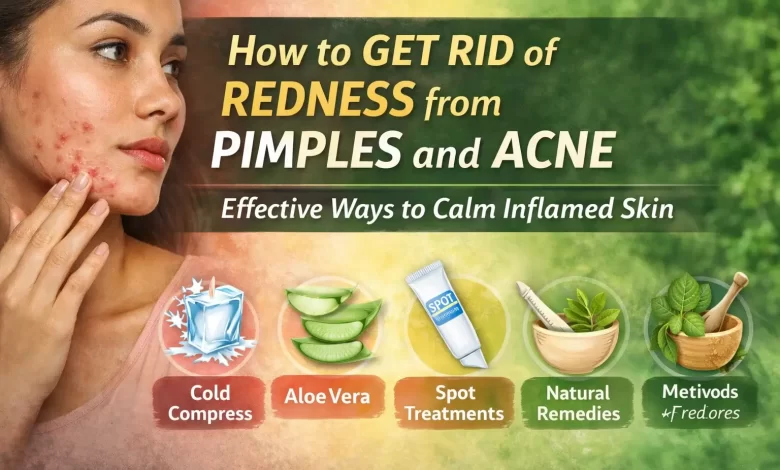
1. Use a Cold Compress
A cold compress is one of the fastest ways to reduce redness and swelling, as cold temperature narrows blood vessels and reduces inflammation.
– How to Use a Cold Compress for Pimple Redness:
- First, wrap ice in a clean cloth.
- Secondly, apply it gently to the pimple for 1 minute.
- Now, leave it for a minute and repeat.
- Lastly, repeat this step for 5 minutes total.
Remember to never apply ice directly to the skin. Always wrap it to avoid irritation.
2. Apply Aloe Vera
Aloe vera is widely known for its anti-inflammatory and soothing properties. It contains compounds such as aloin and polysaccharides, which help calm irritated skin and reduce redness.
Research published in the Indian Journal of Dermatology shows that aloe vera can help improve inflammatory skin conditions due to its soothing and antimicrobial effects. Aloe vera may help:
- Calm redness and swelling
- Soothe irritated skin
- Support faster healing
- Hydrate the skin without clogging pores
– How to use Aloe Vera for Pimple Redness:
- First, you can use the homemade aloe vera gel from fresh aloe vera or buy an organic aloe vera gel.
- Secondly, you have to apply a thin layer on the pimple.
- Now, leave it for 20-30 min or overnight.
- Lastly, rinse off in the morning after you wake up.
This method helps you to learn how you can get rid of the redness from pimples naturally.
3. Use Green Tea Compress
Green tea contains powerful antioxidants called polyphenols, particularly epigallocatechin gallate (EGCG), which can reduce inflammation and bacterial activity in acne.
According to research published in the Journal of Investigative Dermatology, green tea extracts may help decrease sebum production and inflammatory acne lesions.
– How to use Green Tea for Pimple Redness:
- Brew a cup of green tea and let it cool.
- Secondly, dip a cotton pad in it.
- Now, dab it on your pimple for 5–10 minutes.
Green Tea for Acne, can reduce redness and help the pimple heal faster.
4. Chamomile Tea Compress
Chamomile has long been used in herbal medicine because of its anti-inflammatory and soothing properties. It contains compounds such as flavonoids and terpenoids, which may help reduce skin inflammation.
A study published in Molecular Medicine Reports indicates that chamomile may support skin healing and reduce inflammatory skin reactions. Chamomile tea may help:
- Calm redness and irritation
- Soothe sensitive skin
- Reduce inflammation around pimples
– How to Use Chamomile Tea for Pimple Redness
- Brew a cup of chamomile tea.
- Allow the tea to cool completely.
- Dip a cotton pad into the tea.
- Gently apply it to the affected area for 5–10 minutes.
This can be done once or twice daily to soothe irritated skin.
5. Try a Spot Treatment with Salicylic Acid
Salicylic acid is one of the most common dermatologist-recommended acne treatments. It belongs to the beta hydroxy acid (BHA) family and works by:
- Unclogging pores
- Dissolving excess oil
- Reducing inflammation
Studies published in Dermatologic Therapy show that salicylic acid helps reduce acne lesions and redness by exfoliating inside the pores.
– How to Use Salicylic Acid for Pimple Redness:
- Apply a small amount directly to the pimple
- Use once or twice daily depending on skin sensitivity
- Avoid excessive use to prevent dryness or irritation
How to Get Rid of Redness from Acne in the Long Term?
While quick fixes can help you temporarily, long-term habits matter most of the time. If you often deal with inflamed acne, you need a proper routine that prevents redness from coming back again. You can add the following things to your routine, such as:
– Use a Gentle Cleanser
Harsh cleansers strip your skin and increase irritation. Dermatologists recommend using gentle, fragrance-free cleansers that remove dirt and oil without stripping natural moisture.
- Wash your Face Twice a day
- Clean your skin after sweating
- With lukewarm water
- Avoid scrubbing aggressively
You have to avoid scrubbing too hard, and using a gentle cleansing is key for getting rid of redness from acne.
– Moisturize Daily
Many people skip moisturizer because they think it can cause acne and make it oily, but the reality is quite opposite, as dry skin can lead to more oil and more breakouts. To stop breakouts and redness, you have to choose:
- Oil-free moisturizer
- Non-comedogenic products
- Lightweight gel formulas
Hydrated skin heals faster and shows less redness.
– Use sunscreen every day
Sun exposure makes your acne redness worse and slows healing. UV radiation increases inflammation and may also cause post-inflammatory hyperpigmentation, which leaves dark marks after pimples heal.
- SPF 30 or higher
- Non-greasy formula
- Suitable for acne-prone skin
This step is often ignored, but it is very important when you want to get rid of redness from pimples and acne.
What Ingredients in a Product Can Reduce Redness?
Some skincare ingredients are known for calming the inflammation of your skin. If you add them to your routine, they can make a big difference.
- Niacinamide: It helps to reduce redness and strengthen your skin barrier.
- Tea tree oil: It has antibacterial properties and should always be diluted before use.
- Centella asiatica: It is a soothing plant extract that calms irritated skin.
- Benzoyl peroxide: It kills acne bacteria and reduces inflammation.
- Zinc: It helps control oil and calm redness.
Using products with these ingredients can help you get rid of redness from pimples effectively.
Home Remedies to Get Rid of Redness from Pimples and Acne
Many people prefer natural remedies when dealing with acne redness because they are gentle, affordable, and easily available at home. While home remedies may not remove pimples overnight, they can help calm inflammation, soothe irritated skin, and reduce visible redness.
These remedies work best for mild to moderate acne redness and should always be used gently to avoid further irritation. Below are some of the most commonly recommended home remedies that may help reduce redness from pimples.
1. Honey Mask
Honey has been used for centuries as a natural skincare ingredient because of its antibacterial, anti-inflammatory, and healing properties. Raw honey contains enzymes and antioxidants that may help fight acne-causing bacteria and soothe irritated skin.
Research published in the Asian Pacific Journal of Tropical Biomedicine suggests that honey possesses antimicrobial activity and may help reduce skin infections and inflammation.
When applied to the skin, honey can help:
- Reduce redness and swelling
- Soothe irritated skin
- Promote faster healing of pimples
- Maintain skin moisture
– How to Use Honey for Pimple Redness:
- Wash your face with a gentle cleanser.
- Apply a thin layer of raw or organic honey directly to the pimple or affected area.
- Leave it on the skin for 10–15 minutes.
- Rinse with lukewarm water and gently pat your face dry.
This remedy can be used 2–3 times per week for best results.
2. Cucumber Slices
Cucumber is well known for its cooling and hydrating properties. It contains antioxidants such as vitamin C and caffeic acid, which may help reduce skin irritation and swelling.
According to dermatological research, cucumber extract can help soothe inflamed skin and support hydration, which is important for skin recovery. Applying cucumber to the skin may help:
- Calm irritated and inflamed areas
- Reduce redness
- Hydrate dry or irritated skin
- Provide a cooling sensation
– How to Use Cucumber for Acne Redness:
- Cut fresh cucumber into thin slices.
- Place the slices in the refrigerator for 10–15 minutes.
- Apply the chilled slices directly to the affected areas.
- Leave them on the skin for 10–15 minutes.
You can repeat this method once or twice daily to help calm irritated skin.
3. Oatmeal Mask
Oatmeal is known for its skin-soothing and anti-inflammatory properties. It is commonly used in dermatology to treat conditions such as eczema and skin irritation.
According to research published in the Journal of Drugs in Dermatology, colloidal oatmeal helps reduce skin inflammation and strengthens the skin barrier. Oatmeal may help:
- Reduce redness and irritation
- Absorb excess oil
- Soothe inflamed skin
- Support skin barrier repair
– How to Use an Oatmeal Mask
- Grind plain oats into a fine powder.
- Mix it with warm water to form a paste.
- Apply the paste to the affected areas.
- Leave it for 10–15 minutes.
- Rinse gently with lukewarm water.
This mask can be used 2–3 times per week.
Habits to Stop When You Have Pimples
Sometimes the redness of the pimples becomes worse because of common mistakes you make. You have to avoid these habits if you have pimples:
- Picking or popping your pimples
- Using too many products all at once
- Over-washing your face daily
- Using harsh scrubs on your face
- Applying toothpaste to pimples to dry them
- Ignoring moisturizer
- Skipping sunscreen
Popping your pimples, especially, increases redness and can lead to long-lasting scars.
Diet & Lifestyle Tips to Get Rid of Redness from Pimples and Acne
Healthy diet and lifestyle can reduce acne inflammation and redness over time. You have to adopt the tips below:
- Eat anti-inflammatory foods. You have to add anti-inflammatory foods to your diet, which include:
- Fruits
- Vegetables
- Nuts
- Fish
- Whole grains
- Drink enough water: You have to drink enough water, as hydration supports and provides you with healthy skin.
- Manage your stress: Stress can trigger breakouts and increase redness, so to reduce that, you have to work on your stress.
- Get enough sleep: Skin repairs itself during sleep, and getting a good sleep helps you get that clear and healthy skin.
These habits support your journey in getting rid of redness from acne naturally.
When to Consult a Dermatologist
If your acne redness is severe or painful, then home treatments may not be enough for you. You should consult a dermatologist who will provide some stronger treatments for your acne redness and breakouts, such as:
- Prescription creams
- Oral medication
- Chemical peels
- Laser treatments
- Cortisone injections
Cortisone injections can quickly reduce redness in large, inflamed pimples, which is useful for special occasions.
If your redness does not improve or leaves marks after using home remedies, then you must seek help from a professional.
Final Thoughts
You can reduce redness from pimples and acne, but it takes time and proper care. Quick fixes like a cold compress or aloe vera can calm the skin for a short while. For long-term results, follow a gentle skincare routine, drink plenty of water, use sunscreen, and maintain healthy daily habits.
Try not to pick or touch your pimples, and keep your routine simple and consistent. With regular care, the redness will slowly reduce, and your skin will look calmer and healthier. If your acne becomes severe, it’s the best time to see a dermatologist.
Healthy skin isn’t about being perfect. It’s about balance, care, and patience.