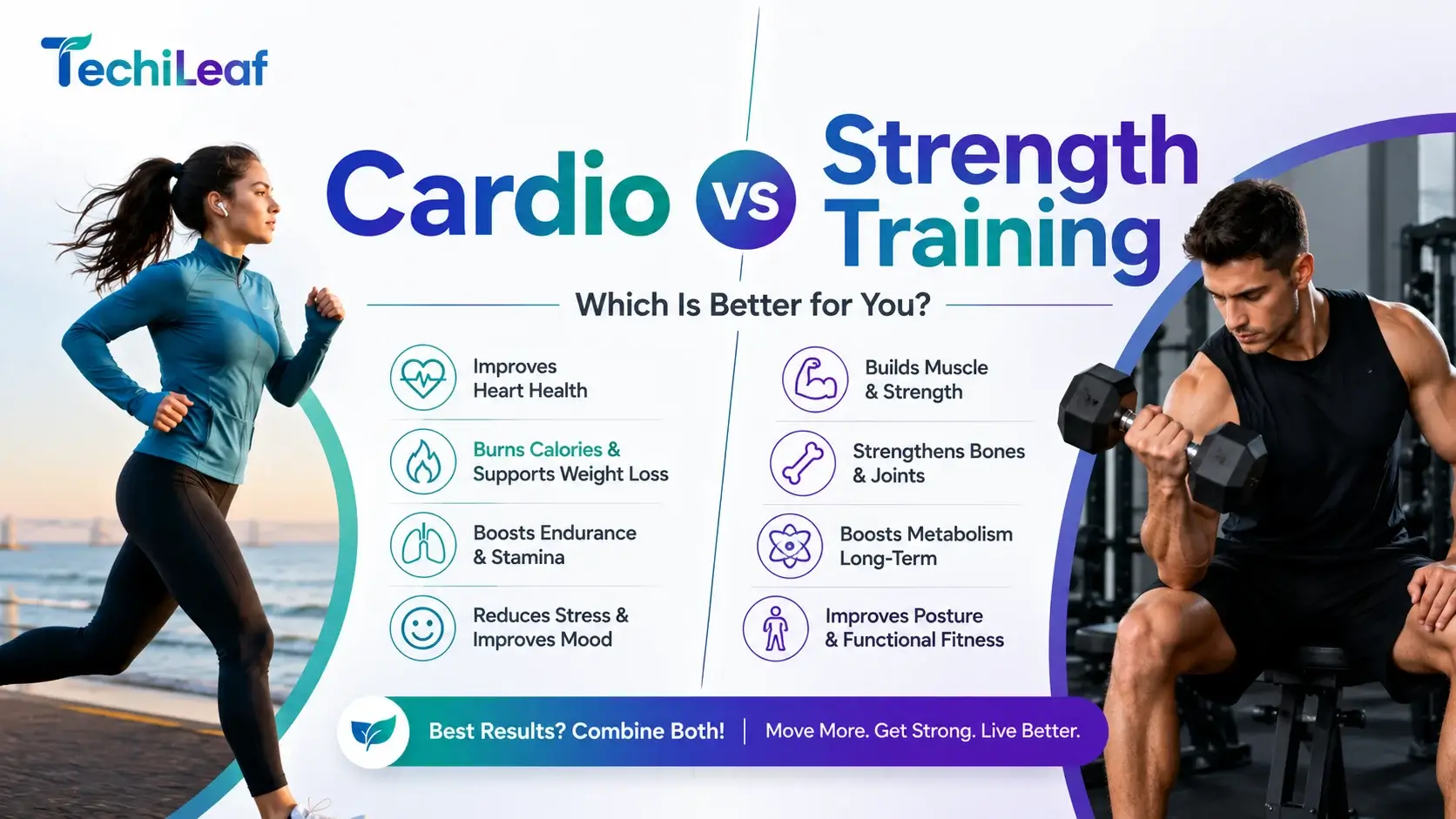
When it comes to fitness, one of the most common debates is whether cardio vs strength training is the better option. The answer depends on your specific goals, body type, and preferences.
Both forms of exercise have their unique benefits and play different roles in your overall health and fitness. This comprehensive article will dive into the key differences, benefits, drawbacks, and when to use cardio or strength training to achieve optimal results.
Cardio vs Strength Training: Which is Best for You?
1. What is Cardio?
Cardio (short for cardiovascular exercise) involves activities that increase your heart rate and make your breathing more intense. It primarily focuses on improving your heart and lung capacity while burning calories.
The word “cardio” comes from “cardiovascular,” meaning it directly engages the circulatory system.
– Types of Cardio Workouts
- Low-Intensity Steady-State (LISS): Exercises like walking, jogging, swimming, or cycling at a moderate pace over an extended period.
- High-Intensity Interval Training (HIIT): Short bursts of intense exercise followed by rest or lower-intensity exercises (e.g., sprinting for 30 seconds followed by 1 minute of walking).
- Sports and Recreational Activities: Tennis, soccer, basketball, dancing, or any activity that keeps your heart rate elevated for an extended time.
– Benefits of Cardio
- Improves Heart Health: Cardio is one of the most effective ways to strengthen your heart. It helps lower blood pressure, improves circulation, and reduces the risk of heart disease.
- Increases Endurance: Over time, regular cardio can increase your endurance and stamina, allowing you to engage in physical activities for longer periods without fatigue.
- Promotes Weight Loss: Since cardio burns calories quickly, it is one of the best forms of exercise for weight loss. HIIT, in particular, is effective for burning fat and calories in a shorter amount of time.
- Improves Lung Capacity: Consistent cardio training improves your lungs’ ability to take in oxygen and deliver it to the muscles, which helps improve overall respiratory function.
- Boosts Mental Health: Cardio workouts release endorphins, often referred to as “feel-good” hormones, which can reduce stress, anxiety, and depression.
- Burns Calories Efficiently: In general, cardio exercises burn more calories in a shorter time compared to strength training, making it a go-to option for people who aim for immediate calorie burn.
2. What is Strength Training?
Strength training (also known as resistance training or weight training) involves exercises that make your muscles work against some form of resistance, whether it be free weights, resistance bands, or your own body weight.
Strength training’s main purpose is to increase muscle strength, endurance, and size.
– Types of Strength Training
- Weightlifting: Using dumbbells, barbells, kettlebells, or machines to perform exercises like squats, deadlifts, bench presses, and rows.
- Bodyweight Exercises: Movements that use your own body weight for resistance, such as push-ups, squats, lunges, and planks.
- Resistance Bands: Elastic bands that provide varying levels of resistance, making exercises like bicep curls and leg presses more challenging.
– Benefits of Strength Training
- Builds Muscle Mass: The most obvious benefit of strength training is that it builds muscle. This can improve your physique, increase strength, and contribute to better performance in physical activities.
- Boosts Metabolism: Strength training increases your resting metabolic rate (RMR), which means you burn more calories at rest, even when you’re not working out. This can support long-term fat loss.
- Strengthens Bones: Weight-bearing exercises help improve bone density, reducing the risk of osteoporosis and fractures as you age.
- Improves Posture and Balance: Strength training strengthens your core and back muscles, which are crucial for maintaining proper posture. It also improves balance and coordination.
- Promotes Long-Term Fat Loss: While cardio burns more calories during a workout, strength training helps maintain muscle mass and reduce body fat over time, especially when combined with a healthy diet.
- Prevents Injuries: Strengthening your muscles and connective tissues can help protect your joints and reduce the likelihood of injury during other physical activities.
3. Key Differences Between Cardio and Strength Training
| Feature | Cardio | Strength Training |
|---|---|---|
| Primary Goal | Improve cardiovascular endurance and burn calories | Build muscle strength, size, and endurance |
| Calorie Burn | Burns more calories per minute during exercise | Burns fewer calories during exercise but increases post-workout burn |
| Body Composition Effects | Primarily leads to fat loss | Builds muscle mass and increases metabolism |
| Heart and Lung Health | Strongly improves cardiovascular and respiratory health | Moderate improvement |
| Metabolic Impact | Short-term calorie burn during exercise | Long-term metabolic boost due to muscle gain |
| Equipment | Often requires minimal equipment (e.g., running shoes, bike) | Can involve free weights, machines, or bodyweight resistance |
| Recovery | Requires less recovery time | Muscles need rest to recover and grow |
4. Which is Better for Weight Loss?
Both cardio and strength training can play significant roles in weight loss, but they do so in different ways.
– Cardio for Weight Loss
Cardio is effective at burning calories in real-time. Exercises like running, cycling, and swimming can burn anywhere from 300 to 600+ calories per hour, depending on the intensity and individual body weight.
HIIT is particularly useful because it continues to burn calories for hours after the workout (known as the “afterburn effect”).
Pros:
- Immediate calorie burn
- Can be done daily without extensive recovery time
- Great for beginners
Cons:
- Does not build muscle
- Potential muscle loss if done excessively without strength training
– Strength Training for Weight Loss
Strength training, on the other hand, builds muscle, and muscle is metabolically active. The more muscle you have, the more calories you burn at rest.
While strength training burns fewer calories during the workout compared to cardio, it increases the total number of calories you burn throughout the day due to the increase in lean muscle mass.
Pros:
- Increases metabolism over time
- Helps maintain muscle while losing fat
- Improves body composition (lean muscle to fat ratio)
Cons:
- Requires recovery time between sessions
- Burns fewer calories during the actual workout
5. Which is Better for Building Muscle?
Strength training is the clear winner when it comes to building muscle. Lifting weights, using resistance bands, or engaging in bodyweight exercises are designed to stress the muscles, forcing them to adapt and grow stronger.
Cardio, by contrast, does not significantly contribute to muscle gain. In fact, excessive cardio, especially at high intensities, can potentially lead to muscle loss if not combined with strength training.
6. How Cardio and Strength Training Affect Your Body
– Cardio’s Effect on the Body
- Heart and Lungs: Cardio exercises improve heart function, making the heart more efficient at pumping blood and delivering oxygen to your muscles. Over time, this can lead to a lower resting heart rate and improved lung capacity.
- Fat Loss: Cardio burns calories, which helps create a caloric deficit essential for fat loss. However, without strength training, cardio alone may lead to a “skinny fat” appearance, where muscle mass is low, and body fat is still present.
- Endurance: Cardio significantly improves muscular endurance, allowing you to perform physical tasks for longer periods without fatigue.
– Strength Training’s Effect on the Body
- Muscle Growth: Resistance exercises break down muscle fibers, which are then rebuilt stronger during recovery. Over time, this leads to increased muscle size and strength.
- Fat Loss and Metabolism: Building muscle boosts your resting metabolic rate, meaning you’ll burn more calories throughout the day, even while at rest. This helps with long-term fat loss and weight maintenance.
- Bone Health: Strength training strengthens not only your muscles but also your bones, reducing the risk of age-related bone density loss.
7. Combining Cardio and Strength Training
For optimal health and fitness, a combination of both cardio and strength training is recommended. This strategy allows you to reap the benefits of both while addressing different fitness goals.
– Cardio for Heart Health & Endurance
Even if your primary goal is building muscle, incorporating cardio will keep your heart and lungs healthy. It can also aid in recovery by increasing blood flow to the muscles and reducing soreness.
– Strength Training for Fat Loss & Muscle Gain
If your goal is to lose fat, combining strength training with cardio is ideal. Strength training helps preserve muscle mass, which is crucial for a toned appearance and higher metabolism, while cardio accelerates fat loss.
– Sample Weekly Routine for Balance
- Day 1: Full-body strength training (45 minutes)
- Day 2: 30-minute moderate cardio session (running, cycling)
- Day 3: Upper body strength training (30 minutes)
- Day 4: HIIT cardio (20-30 minutes)
- Day 5: Lower body strength training (30 minutes)
- Day 6: Active recovery or light cardio (walking, swimming)
- Day 7: Rest or yoga/stretching
Conclusion: Cardio vs Strength Training Which is Best for You?
The answer to whether cardio or strength training is best depends on your goals.
- If you want to improve cardiovascular health, build endurance, or lose weight quickly, cardio might be your go-to.
- If you’re looking to build muscle, increase strength, boost your metabolism, or achieve long-term fat loss, strength training will be more beneficial.
- For overall fitness and health, combining both is the ideal strategy. You’ll not only build strength and muscle but also keep your heart healthy, burn calories, and improve endurance.
Ultimately, the best workout is the one that you enjoy and can stick with consistently. Whether it’s running, lifting weights, or a mix of both, the key is staying active and finding a balance that works for your body and goals.