Hormonal acne in women is one of the most common and frustrating skin concerns that affects teenagers, young adults, and even some women in their 30s, 40s, and beyond.
These breakouts are often deep, painful, and stubborn, and they tend to appear around your jawline, chin, neck, and lower cheeks. Unlike your regular acne, hormonal acne is strongly linked to internal hormone changes rather than just clogged pores or poor skincare.
The good news is that with the right knowledge, treatment plan, and prevention steps, you can easily manage and reduce your hormonal acne effectively.
This 2026 guide explains to you the causes, treatments, lifestyle tips, and some prevention steps for hormonal acne in women. Whether your acne is linked to your menstrual cycle, stress, PCOS, or adult hormonal changes, this guide will help you understand what is happening and what you can do about it.
What is Hormonal Acne?
Hormonal acne is the acne that is triggered by some hormonal changes in your body. Some hormones, such as androgens, can increase the oil production in your skin.
When your skin produces too much oil, your skin pores get clogged with oil and dead skin cells. Then, bacteria grow in the clogged pores, which leads to pimples, cysts, and inflammation.
You may get hormonal acne on the following parts of your body:
- Around your jawline and chin.
- On your lower cheeks.
- On your neck.
- Sometimes on your back or chest.
It is often deeper and more painful than your normal acne, and these breakouts may appear at the same time every month or during periods of stress or hormonal imbalance.
Common Hormonal Triggers That Cause Acne in Women
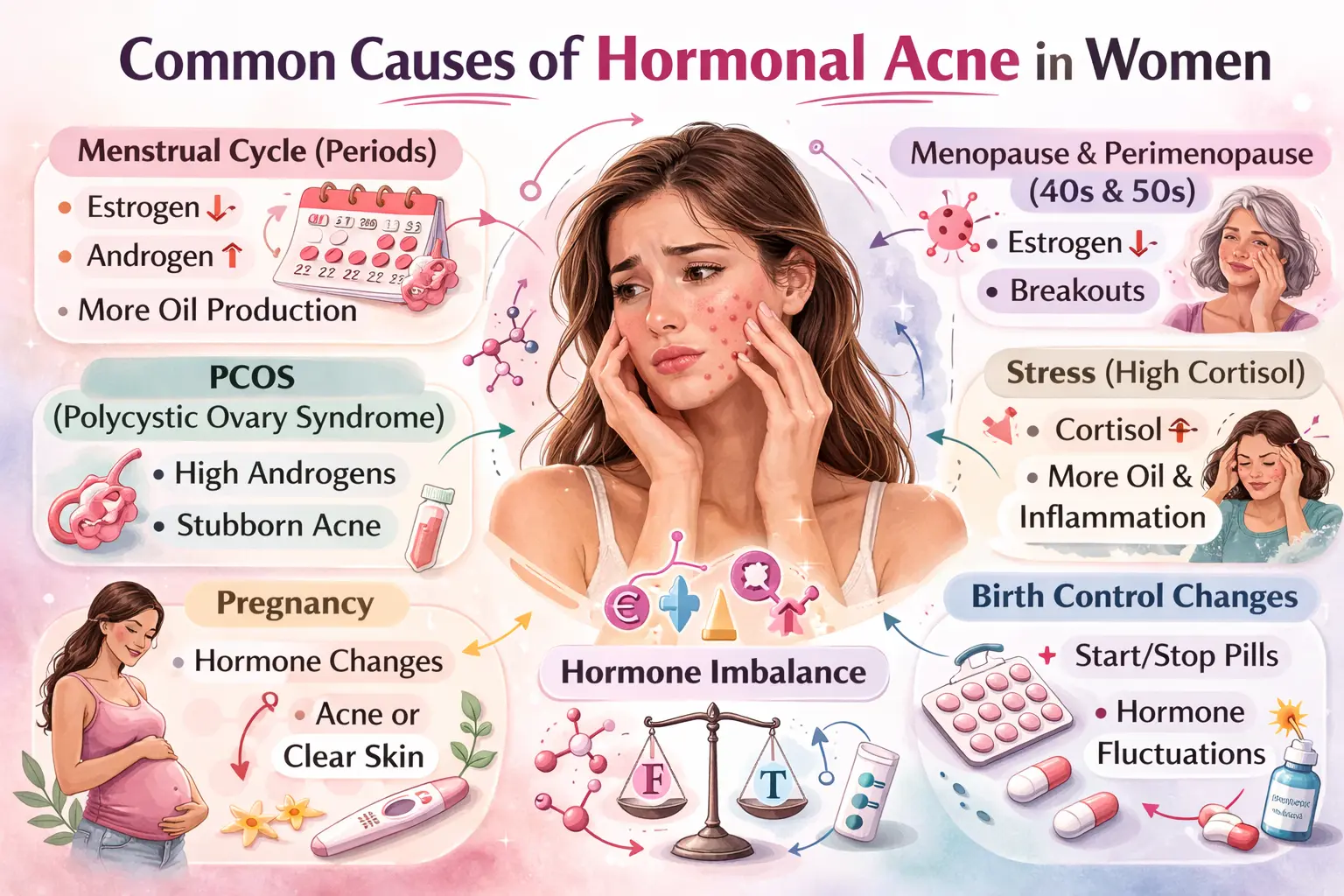
Women get hormonal acne when their hormone levels change or become unbalanced. Many women experience hormone shifts throughout their life and these shifts can trigger acne at different stages. Below are some stages where women get hormonal acne.
– Menstrual Cycle (Periods)
Many women notice breakouts before their periods, and this happens because their estrogen level drops and androgen level slightly rises. The increase in androgen levels leads to more oil production, which can clog pores.
– Polycystic Ovary Syndrome (PCOS)
PCOS is a common condition that affects your hormone levels in women and increases androgens in your body, which leads to acne, irregular periods, and excess facial hair. Women with PCOS often have stubborn hormonal acne.
– Pregnancy
Hormone changes in women during pregnancy can cause acne in some women, but for some women, pregnancy improves their skin. The changes during pregnancy completely depend on how your body responds to hormone shifts.
– Menopause and Perimenopause
During perimenopause and menopause, your estrogen levels drop, which can create a hormone imbalance that leads to breakouts. Many women surprisingly get acne again in their 40s and 50s.
– Stress
Stress raises cortisol levels in your body, and high cortisol levels can trigger more oil production and inflammation, which can worsen your acne.
– Birth Control Changes
Starting or stopping any birth control pills can affect your hormone levels. Some pills can help you control your acne, while others can make it worse depending on how they affect your androgen levels.
What Does Hormonal Acne Look Like?
Hormonal acne has some clear signs.
You may have:
- Deep and painful pimples.
- Cystic acne under the skin.
- Breakouts in the same area every month.
- Acne that does not heal with basic skincare.
- Oily skin with inflamed bumps.
These hormonal acne often take a longer time to heal and may leave dark marks or scars if not treated properly.
How is Hormonal Acne Different from Regular Acne?
Regular acne is often caused by clogged pores, bacteria, and poor skincare habits. Hormonal acne is driven mainly by internal hormone changes. You can have a perfect skincare routine and still get hormonal acne.
Here are some key differences that will help you understand how hormonal acne is different from your regular acne:
- Hormonal acne appears during your menstrual cycle.
- These acne are often deep and cystic.
- They mostly appear on your lower face.
- They can come back in your adulthood.
Understanding this difference is important because the treatment of your hormonal acne needs more than just face washes and creams.
Best Treatments for Hormonal Acne in Women
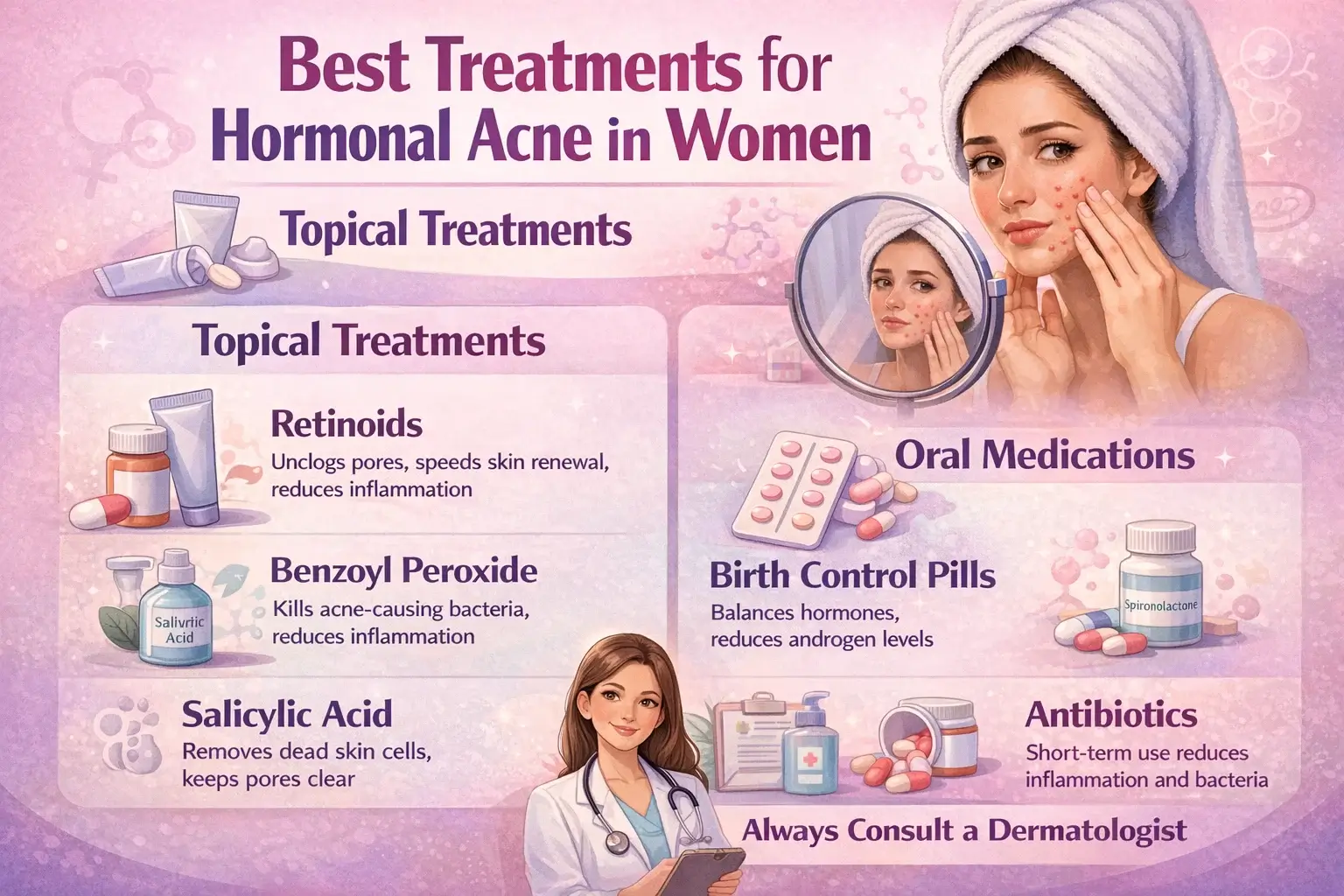
Treating your hormonal acne needs a mix of good skincare, lifestyle changes, and sometimes good medical treatment. The right approach depends on how severe your acne is. Below are some best treatments for your hormonal acne in women.
- Tropical Treatments: These treatments are applied directly to your skin and can help you reduce mild and moderate acne.
- Retinoids: Retinoids help you by unclogging pores and speeding up skin renewal. They also help in reducing inflammation and help to prevent future breakouts.
- Benzoyl Peroxide: This will help to kill acne-causing bacteria and reduce inflammation.
- Salicylic Acid: This acid helps you by removing dead skin cells and keeps your pores clear. You should use gentle products and avoid harsh scrubs and strong products that can irritate your skin and make your acne worse.
- Oral Medications: For your moderate to severe hormonal acne, doctors will prescribe you some oral treatments.
- Birth Control Pills: Certain birth control helps you by balancing your hormones and reducing your androgen levels, which will lower your oil production and reduce acne.
- Anti-Androgen Medications: Spironolactone is often used to block androgen effects on your skin. It can be very helpful for hormonal acne in adult women.
- Antibiotics: Short-term use of antibiotics may help you by reducing inflammation and bacteria. These antibiotics are usually used along with topical treatments. You have to always consult a dermatologist before starting any medication. Organizations like the American Academy of Dermatology recommend some personalized treatment based on skin type and health history.
Can Lifestyle Changes help You Reduce your Hormonal Acne?
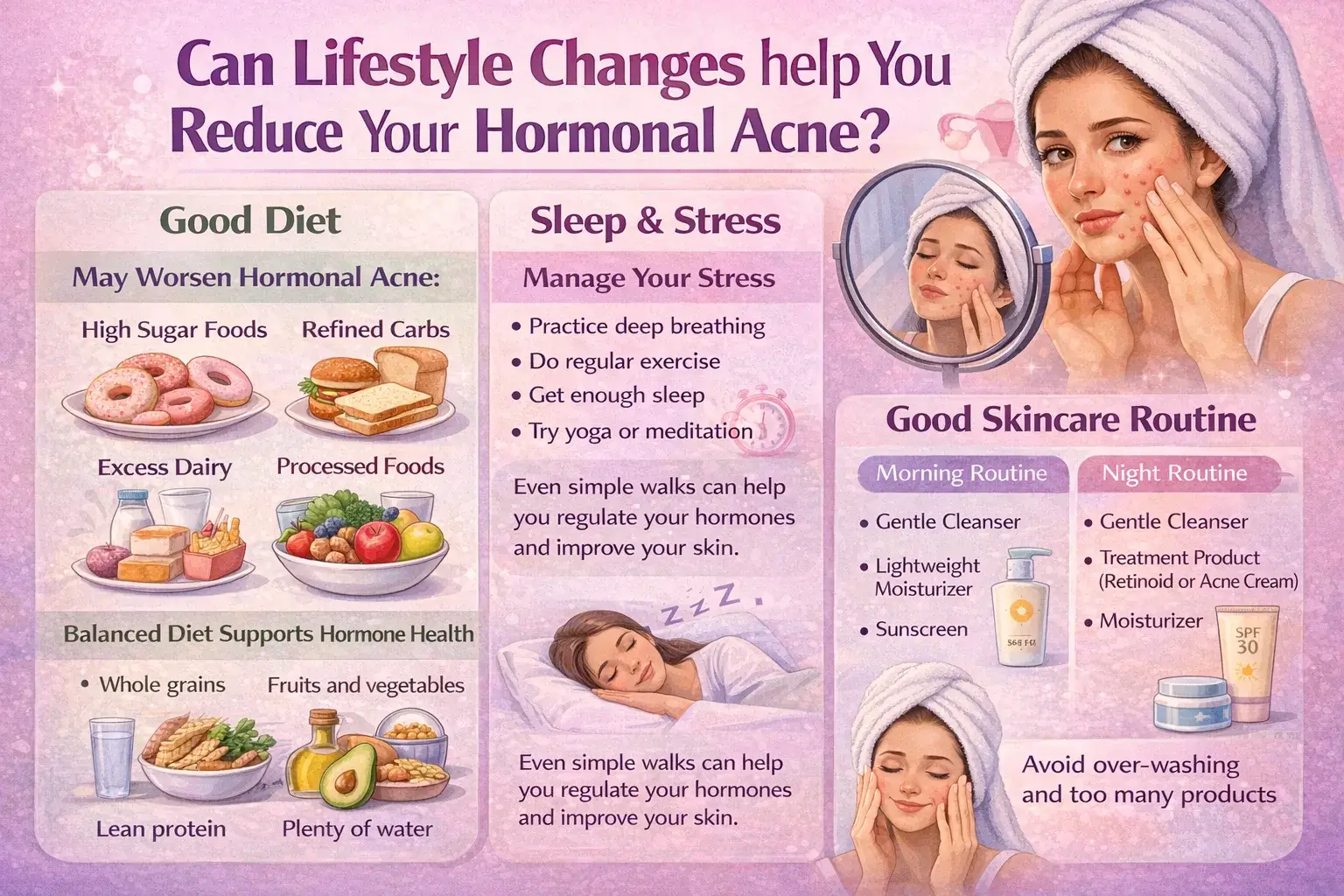
Yes, lifestyle plays an important role in hormonal balance and skin health. You can make lifestyle changes in the following aspects to reduce your hormonal acne:
– Good Diet
We now know that diet affects your acne. Below are some foods that may worsen hormonal acne:
- High sugar foods
- Refined carbs
- Excess dairy
- Processed foods
A balanced diet supports your hormone health. You should follow the dietary items below:
- Whole grains
- Fruits and vegetables
- Healthy fats
- Lean protein
- Plenty of water
Some women notice improvement when they reduce sugar and processed foods.
– Sleep and stress
Lack of sleep and high stress can worsen your hormonal acne. Stress raises cortisol, which can increase oil production. Below are some tips that will help you to manage your stress.
- Practice deep breathing every day
- Do regular exercise.
- Get enough sleep.
- Try yoga or meditation.
Even simple walks can help you regulate your hormones and improve your skin.
– Good Skincare Routine
A simple and consistent skincare routine works best rather than a costly one-day skincare regimen.
— Morning Routine:
- Gentle cleanser
- Lightweight moisturizer
- Sunscreen
— Night Routine:
- Gentle cleanser
- Treatment product (retinoid or acne cream)
- Moisturizer
Avoid over-washing or using too many products at one time, as it can irritate your skin and make your acne worse.
When Should You Consult a Dermatologist?
You should consult a dermatologist under the following circumstances:
- Acne is painful and cystic.
- Acne leaves scars.
- Over-the-counter products do not work on your skin.
- Acne affects your confidence.
- Suspect PCOS
A dermatologist can recommend some good treatments based on your hormone levels and skin type. In some cases, some blood tests may be needed.
Prevent Hormonal Acne from Happening Again in the Future
Hormonal acne cannot always be fully prevented, but it can be controlled. Below are some prevention tips that you can follow to control your hormonal acne.
- Follow a gentle skincare routine.
- Manage your stress levels
- Eat a balanced diet
- Sleep well
- Keep yourself hydrated
- Avoid touching your face often.
- Remove your makeup before bed.
Tracking your monthly cycle can also help you to control your hormonal acne. If you notice any breakouts before your period, you can adjust your skincare routine during that time.
Does Hormonal Acne Go Away with Age?
For some women, hormonal acne improves with age, but for others, it can continue into adulthood. Many women experience acne in their 30s and 40s due to stress, hormonal changes, and lifestyle factors. The key is not to ignore it, as it can be managed at any age by proper treatment and care.
Final Thoughts
Hormonal acne in women can feel frustrating, especially when it keeps coming back. But understanding the cause is the first step toward controlling your hormonal acne. Your hormones can deeply affect your skin, but there are many effective ways to manage breakouts.
A mix of medical treatment, gentle skincare, a balanced diet, stress management, and patience can make a big difference for you. Every woman’s skin is different, so finding the right routine may take time, and with the right approach, clearer skin is possible.
Frequently Asked Questions:
What Triggers Hormonal Acne in Women the Most?
Where does Hormonal Acne Usually Appear?
Can Hormonal Acne be Cured Permanently?
Can Birth Control Pills help with Hormonal Acne?
How can I Prevent Hormonal Acne Naturally?