Acne is a common skin condition affecting millions globally—regardless of age or gender. While there’s no shortage of chemical treatments, many are turning to natural, time-tested remedies. Among these, neem (Azadirachta indica)—also known as the “Village Pharmacy” in Ayurveda—stands out for its powerful antibacterial, anti-inflammatory, and skin-healing properties.
In this article, we explore how neem for acne helps, backed by scientific evidence, traditional wisdom, and expert recommendations.
What is Neem?
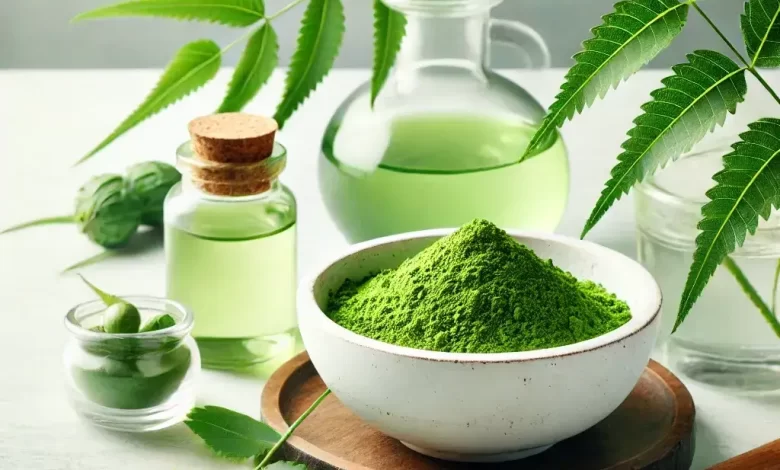
Neem is a fast-growing evergreen tree native to the Indian subcontinent. All parts of the plant—leaves, bark, seeds, and oil—are used for medicinal purposes. Neem has been a staple in Ayurvedic medicine for over 5,000 years and is revered for treating skin disorders, infections, and inflammatory conditions.
The Science Behind Neem for Acne: Why It Works
Neem (Azadirachta indica), known as the “wonder tree” in traditional Indian medicine, has long been recognized for its powerful healing properties—especially for skin. In recent decades, modern science has validated many of its traditional uses, revealing exactly how neem combats acne at a biological level.
Below are the key scientific mechanisms through which neem helps prevent and treat acne:
1. Antibacterial & Antimicrobial Action
Acne is primarily caused by the overgrowth of the bacteria Cutibacterium acnes (formerly Propionibacterium acnes), which thrives in clogged pores.
— How Neem Helps
Neem contains potent bioactive compounds like:
- Nimbidin
- Azadirachtin
- Nimbin
- Gedunin
- Quercetin
These compounds exhibit broad-spectrum antibacterial activity against various strains of acne-causing bacteria.
— Scientific Evidence
A study published in the Journal of Ethnopharmacology (2004) confirmed neem leaf extract’s effectiveness in inhibiting growth of C. acnes and Staphylococcus epidermidis—two bacteria strongly linked to acne formation.
Another study in the International Journal of Cosmetic Science (2010) found that topical neem extract significantly reduced skin bacterial counts within 48 hours.
Why this matters: Killing these bacteria helps prevent infection, reduce inflammation, and stop the formation of new acne lesions.
2. Anti-Inflammatory Properties
Inflammation is a hallmark of acne. When pores are clogged, the immune system responds with inflammation—resulting in redness, swelling, and painful pimples.
— How Neem Helps
Neem’s natural anti-inflammatory agents—particularly nimbin, nimbidin, and salannin—work to:
- Reduce pro-inflammatory cytokines (e.g., TNF-α, IL-6)
- Calm irritated skin
- Relieve pain and redness
— Scientific Evidence
Research in Inflammopharmacology (2002) demonstrated neem’s ability to suppress inflammatory responses in animal models.
A 2020 study in the Journal of Medicinal Plants Studies concluded that neem leaf extract significantly decreased skin inflammation markers when used topically.
Why this matters: Reducing inflammation helps in shrinking pimples and speeding up skin recovery.
3. Sebum Regulation & Oil Control
Excess sebum (oil) contributes to clogged pores and feeds bacteria. This is especially common in people with oily skin or hormonal imbalances.
— How Neem Helps
Neem has a mild astringent quality and contains fatty acids like:
- Stearic acid
- Oleic acid
- Palmitic acid
These help regulate oil production by:
- Balancing sebaceous gland activity
- Unclogging pores naturally
- Reducing skin’s surface oil without over-drying
— Scientific Insight
According to Ayurvedic principles, neem helps balance Pitta and Kapha doshas, which govern oil and heat in the body. Excess Kapha is traditionally linked to oily skin and clogged pores.
Why this matters: Balancing sebum levels prevents new acne formation and keeps pores clean.
4. Blood Purification and Internal Detox
Ayurveda often views acne as an internal imbalance related to blood toxins or “Ama.” Neem is considered a powerful “Rakta Shodhak” (blood purifier) in Ayurvedic medicine.
— How Neem Helps
- Flushes toxins from the liver and blood
- Reduces internal inflammation
- Lowers oxidative stress in the body
— Clinical Studies
A study in the Ancient Science of Life journal found that internal use of neem helped reduce acne severity by improving blood quality and detoxification pathways.
Another research paper published in Phytotherapy Research (2006) confirmed neem’s antioxidant and hepatoprotective effects, which indirectly support skin health.
Why this matters: Healthier blood and detoxification systems lead to fewer breakouts, particularly hormonal and cystic acne.
5. Antioxidant Protection
Free radicals and oxidative stress can damage skin cells and worsen acne scars.
— How Neem Helps
Neem is rich in flavonoids and polyphenols that:
- Fight oxidative damage
- Promote cell regeneration
- Protect skin from environmental aggressors
— Scientific Support
A 2014 study in the Journal of Pharmacy and BioAllied Sciences highlighted neem’s high antioxidant activity, contributing to its ability to improve skin tone and reduce post-acne marks.
Why this matters: Antioxidants help repair skin faster and fade acne scars over time.
How to Use Neem for Acne: Step-by-Step Guide
Neem can be used in multiple forms—leaf, oil, powder, extract, and capsules. To get the most out of this herbal powerhouse, it’s essential to use it correctly based on your skin type and acne severity. Below are five effective ways to use neem for acne, along with DIY recipes, usage frequency, and safety notes.
1. Neem Face Pack (For Oily & Acne-Prone Skin)
Purpose: Kills acne-causing bacteria, controls oil, soothes inflammation
— Ingredients
- 1 tbsp neem powder (or crushed fresh neem leaves)
- 1/2 tsp turmeric powder (anti-inflammatory)
- Rose water or aloe vera gel (to mix)
— Instructions
- Mix neem powder and turmeric in a bowl.
- Add rose water or aloe vera gel to form a smooth paste.
- Apply a thin layer to your cleansed face.
- Leave it on for 15–20 minutes or until dry.
- Rinse with lukewarm water and pat dry.
Frequency: 2–3 times per week
2. Neem Oil Spot Treatment (For Active Breakouts)
Purpose: Reduces size of pimples, kills bacteria, speeds up healing
— Ingredients
- Cold-pressed neem oil (100% pure)
- Carrier oil (jojoba oil, tea tree oil, or coconut oil)
— Instructions
- Dilute 2–3 drops of neem oil in 1 tsp carrier oil.
- Using a cotton swab, apply the diluted oil only on active pimples.
- Leave overnight or for 1–2 hours during the day.
- Rinse off if irritation occurs.
Frequency: Daily or as needed on inflamed pimples
3. Neem Leaf Toner (For Daily Use)
Purpose: Tightens pores, prevents bacterial buildup, balances skin pH
— Ingredients
- A handful of fresh neem leaves
- 2 cups of water
— Instructions
- Boil neem leaves in water for 10–15 minutes until it turns green.
- Allow to cool completely, then strain the liquid.
- Store in a spray bottle (refrigerated for up to 5 days).
- After cleansing your face, spray or dab on the toner using a cotton pad.
Frequency: Twice daily
4. Neem Face Wash (Gentle Daily Cleanser)
Purpose: Removes dirt and bacteria without drying out skin
— Option 1: DIY Face Wash
- Mix neem powder with besan (gram flour) and water to form a paste
- Gently massage onto wet face and rinse
— Option 2: Ready-made Products
- Use dermatologist-approved neem-based face washes (e.g., from Himalaya, Biotique, or The Moms Co.)
Frequency: Twice daily (morning and night)
5. Neem Capsules or Juice (For Internal Detox)
Purpose: Detoxifies blood, reduces hormonal acne, supports liver function
— Neem Capsules
- Take 1–2 capsules daily after meals (consult an Ayurvedic doctor for dosage)
— Neem Juice
- Dilute 10–15 ml neem juice in warm water
- Drink on an empty stomach in the morning
Duration: Use for 2–3 weeks, then take a break. Long-term use should be supervised.
Best Practices for Neem Acne Treatments
- Always patch test: Neem is natural but potent. Try any new product on your inner arm before using it on your face.
- Use fresh ingredients: For leaf or paste preparations, fresh neem leaves are more effective than dried.
- Be consistent: Natural remedies take time—use neem regularly for at least 3–4 weeks to see results.
- Hydrate well: Neem may dry out the skin slightly; always follow up with a non-comedogenic moisturizer.
- Combine with lifestyle changes: A healthy diet, stress management, and good hygiene amplify neem’s effects.
Caution & Side Effects
Neem is potent. Overuse can cause dryness, especially for those with sensitive or dry skin. Always do a patch test. Internal use should be supervised by a certified herbalist or Ayurvedic doctor.
— Avoid Neem if:
- You are pregnant or trying to conceive.
- You have autoimmune diseases (consult your doctor).
- You’re allergic to plants in the Meliaceae family.
Final Thoughts
Neem offers a natural, effective, and science-backed approach to acne management. Its antibacterial and anti-inflammatory benefits can rival chemical treatments—minus the harsh side effects. Whether used topically or internally, neem is a valuable addition to any acne-fighting routine.
As with all skin treatments, consistency is key. And if your acne is severe or persistent, always consult with a dermatologist for a customized plan.