
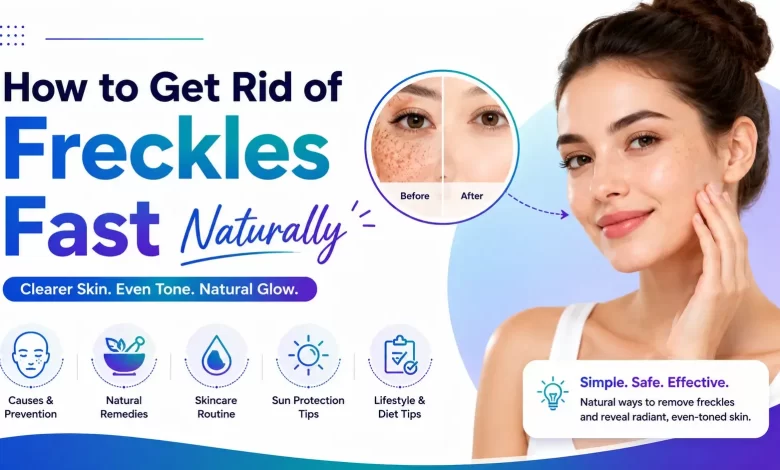
How to Get Rid of Freckles Fast Naturally: Safe Treatments, Home Remedies & Prevention

We all love clear skin, don’t we?
We would even kill for clear and flawless skin. Well, I certainly would!
Add to the woes of blackheads, acne and blemishes, freckles are something that we just don’t like to deal with. Though there are people who think freckles are cute and unique, others would prefer to make them less noticeable.
Anything that makes us feel less confident about our skin can be frustrating, especially when it appears on highly visible areas such as the face, nose, cheeks, shoulders, arms, and upper chest.
The good news is that freckles are usually harmless and there are several ways to make them less noticeable. However, it is important to understand that freckles are often influenced by genetics and sun exposure, so completely preventing or permanently removing them may not always be possible.
Here in this write-up, we want you to know how to get rid of freckles safely and effectively, what treatments are available, which home remedies are worth trying, and how you can prevent freckles from becoming darker.
Anything that impedes us having clear skin is never welcomed!
Isn’t it?
Here in this write up, we want you to know how to get rid of freckles safely and more effectively.
Let’s Learn a Bit about Freckles
Freckles are flat and small patches of light brown or tanned colored pigments that appear on the top layer of the skin (it is known as epidermis) and they generally get more pronounced with the exposure of your skin to the sun.
They commonly appear on areas of the body that receive regular sun exposure, including:
- Face
- Nose and cheeks
- Forehead
- Shoulders
- Arms
- Upper chest
- Back
Freckles are particularly common in people with fair or light skin, although they can occur in people with many different skin tones.
Unlike some types of pigmentation, freckles generally do not have a raised or rough texture. They are simply areas where the skin produces and stores more melanin.
Freckles can also become more noticeable during spring and summer when UV exposure increases and may become lighter during the winter months when sun exposure is reduced.
What Causes Freckles?
Freckles are formed due to the combination of genetics and sun exposure. They are formed due to the pigment called melanin, which is produced in your body by the cells called melanocytes, these are known to protect your skin from the harmful UV rays.
Melanin acts like a little sunglasses for the skin and reflects and absorbs the required amount UV rays, preventing damage to the skin.
In some people, melanocytes are spread equally throughout the body, and this makes them tan evenly. In others however, melanocytes cluster together and result in freckles.
Whereas, in some people melanocytes are present equally throughout the body and this makes them tan quickly and evenly.
However, in some, these melanocytes cluster up together resulting in the formation of freckles.
Are Freckles Genetic?
Yes, genetics plays an important role.
Certain genetic characteristics can make a person more likely to develop freckles, particularly when combined with sun exposure.
This is why freckles often run in families. You cannot change your genetics, but you can reduce UV exposure and protect your skin to help prevent existing freckles from becoming darker and new pigmentation from developing.
Freckles vs. Sunspots: Are They the Same?
Not exactly.
Freckles and sunspots can look similar, but they are different types of pigmentation. Freckles are strongly associated with genetic tendency and UV exposure and are often more noticeable during sunny months.
Sunspots, sometimes called solar lentigines, are generally associated with cumulative sun exposure over time and tend to persist rather than fading significantly during winter.
If you are unsure whether a spot is a freckle, sunspot, mole, or another type of skin lesion, it is best to have it examined by a dermatologist.
Can Freckles Be Removed Permanently?
This is one of the most common questions people ask. Unfortunately, there is no guaranteed permanent method for preventing freckles from returning.
Even when a treatment successfully lightens freckles, continued exposure to UV radiation can cause pigmentation to return or become darker. That is why sun protection is one of the most important parts of any freckle-treatment plan.
Think of treatment as a two-part process: Fade existing pigmentation + prevent further UV-induced pigmentation. Without consistent sun protection, even expensive treatments may provide disappointing results.
How to Get Rid of Freckles Fast?
First of all, Keep Yourself Sun Safe!
Keeping yourself sun safe will help reduce the freckle and fade them with time. Using a good sunscreen that shields your skin will result in protecting your skin against the harmful sun rays.
Check out the ways to get rid of Freckles fast.
Use a Broad-Spectrum Sunscreen
Apply a broad-spectrum sunscreen with SPF 50 or higher to exposed skin.
Remember that sunscreen is not just for beach days. UV exposure occurs during normal daily activities such as walking, driving, shopping, or sitting outdoors.
– For better protection:
- Apply sunscreen generously before going outdoors.
- Reapply approximately every two hours when outdoors, and more frequently after swimming or heavy sweating.
- Wear a wide-brimmed hat when possible.
- Use sunglasses to protect your eyes and surrounding skin.
- Seek shade during periods of strong sunlight.
- Consider protective clothing when spending extended periods outdoors.
Consistent sun protection can help prevent freckles from becoming darker and can also reduce the risk of premature skin aging and sun damage.
Medical Treatments for Freckles
If you want faster or more noticeable results, a dermatologist can recommend treatments based on your skin type, pigmentation, and medical history.
1. Topical Retinoids
Retinoids are vitamin A derivatives commonly used in dermatology.
Some retinoid products are available over the counter, while stronger formulations require a prescription depending on the country.
Retinoids can encourage skin cell turnover and may help improve uneven pigmentation over time. However, they can also cause:
- Dryness
- Redness
- Peeling
- Irritation
- Increased sensitivity
Start only according to professional advice, especially if you have sensitive skin.
Important: Retinoids are generally not recommended during pregnancy unless specifically advised by a healthcare professional.
2. Hydroquinone
Hydroquinone is a skin-lightening ingredient that can reduce melanin production and may be prescribed for certain forms of hyperpigmentation.
However, its availability and permitted concentrations vary by country. In some places, stronger formulations require a prescription.
Hydroquinone should not be used casually or for prolonged periods without medical supervision because inappropriate use can cause irritation and, rarely, a condition called exogenous ochronosis, which can lead to persistent dark or blue-black discoloration.
Always follow a dermatologist’s instructions if hydroquinone is recommended.
3. Azelaic Acid
Azelaic acid is another ingredient commonly used for pigmentation and certain inflammatory skin conditions. It may help improve uneven skin tone while generally being well tolerated by many people.
It can cause mild irritation when first introduced, so gradual use may be appropriate depending on the product and your skin.
4. Vitamin C
Vitamin C is an antioxidant that can help protect skin from oxidative stress and may help improve the appearance of uneven pigmentation.
A topical vitamin C serum can be incorporated into a skincare routine, particularly in the morning. However, vitamin C is not an instant freckle remover. Results usually require consistent use over time.
5. Chemical Peels
Chemical peels use controlled chemical exfoliation to remove or loosen damaged outer layers of skin. Depending on the type and strength, a peel may help improve:
- Uneven pigmentation
- Dull skin
- Certain forms of sun damage
- Uneven skin texture
However, peels can also cause irritation or worsen pigmentation when used incorrectly.
People with darker skin tones may be particularly vulnerable to post-inflammatory hyperpigmentation after aggressive treatments, so professional assessment is important.
6. Laser and Light-Based Treatments
Certain laser and light-based treatments can target pigment and may significantly lighten freckles. These procedures are performed by dermatologists or qualified medical professionals.
However, laser treatment is not necessarily a permanent cure. Freckles may return, particularly with continued sun exposure. Possible side effects include:
- Temporary redness
- Swelling
- Crusting
- Skin irritation
- Changes in pigmentation
- Rarely, scarring
The choice of laser depends on your skin tone, pigmentation, and individual circumstances. Always consult a qualified dermatologist before undergoing laser treatment.
7. Cryotherapy
Cryotherapy involves applying extremely cold temperatures, commonly using liquid nitrogen, to selected skin lesions.
It is more commonly used for certain sun-damaged lesions and other specific skin conditions than as a routine first-line treatment for ordinary freckles.
Because it can cause blistering, scarring, or pigment changes, it should only be considered after a medical assessment.
Home Remedies: Get Rid of freckles fast and naturally!
This is where we need to be realistic.
You will find many websites recommending lemon juice, fruit masks, buttermilk, honey, and other kitchen ingredients for freckles. However, there is limited scientific evidence that these home remedies can actually remove freckles.
Some ingredients may temporarily exfoliate or brighten the skin, but they are not equivalent to clinically studied pigmentation treatments. More importantly, certain popular remedies can actually irritate your skin and make pigmentation worse.
1. Be Careful With Lemon Juice
You may have heard that applying lemon juice directly to freckles can lighten them.
We do not recommend applying undiluted lemon juice directly to your skin.
Lemon and other citrus fruits can irritate the skin, and exposure to sunlight after contact with certain citrus compounds can cause a reaction known as phytophotodermatitis.
This can lead to redness, blistering, burning, and sometimes darker pigmentation afterward. So, while lemon is rich in vitamin C, eating citrus fruits is a safer way to include vitamin C in your diet than rubbing lemon juice onto your face.
2. What About Strawberries?
Strawberries contain vitamin C and other plant compounds, but there is not strong evidence that placing mashed strawberries on your skin will remove freckles.
Some people may also develop irritation or an allergic reaction. If you still want to use a homemade facial mask, patch-test any new ingredient first and stop immediately if burning, itching, or redness develops.
3. Buttermilk and Lactic Acid
Buttermilk contains lactic acid, an alpha-hydroxy acid (AHA).
Lactic acid can gently exfoliate the skin when used in properly formulated skincare products. However, homemade buttermilk masks are not standardized for concentration, pH, or safety.
If your goal is gentle exfoliation, a professionally formulated lactic-acid product is generally more predictable than applying kitchen ingredients directly to your skin.
4. Almond Oil
We all love almonds!
Almond oil can act as a moisturizer and may help soften dry skin. However, there is not enough evidence to conclude that almond oil removes freckles.
These nuts are Vitamin B2, E, B6 enriched and all of these ingredients will not only help clear freckles but also help prevent the wrinkles.
You can use a suitable facial moisturizer or facial oil if your skin tolerates it, but don’t expect it to erase pigmentation.
5. Honey
Honey is a humectant, meaning it can help attract and retain moisture.
It may leave your skin feeling softer, but there is insufficient evidence that honey can significantly remove freckles.
If you enjoy using honey in skincare, consider it a moisturizing ingredient rather than a proven freckle treatment.
6. Fruit Masks
Papaya, strawberries, and other fruits contain various enzymes, acids, antioxidants, and vitamins. However, homemade fruit masks can be unpredictable and may cause irritation, particularly for people with sensitive skin.
For pigmentation concerns, products with standardized active ingredients are generally a better option.
7. Moisturizing your Skin with Humectant & Lemon Juice
Honey is considered as humectant, a substance that holds water and moisturizer. It is also known for containing enzymes that are natural skin lightening agents.
When honey is combined with lemon juice, it forms a very powerful and effective mixture that can be used to get rid of freckles.
The mixture of honey and lemon acts like a natural skin lightening agent too, that is great when used for acne scars and other skin related pigmentation and helps lightening your skin imperfections.
What About Bleaching the Skin?
This is an important point.
Do not use household bleach or harsh bleaching chemicals on your skin.
Household bleach is not a skincare product and can cause chemical burns, irritation, and permanent skin damage.
Some dermatological skin-lightening products may contain medically appropriate ingredients, but these should be selected carefully and used according to professional guidance.
If you have significant pigmentation, speak with a dermatologist rather than trying aggressive bleaching methods at home.
Makeup: A Safe Way to Hide Freckles
If you simply want your freckles to be less visible, makeup can provide immediate results without trying to physically remove the pigmentation.
1. Concealer
A lightweight concealer can be applied to individual areas where you want more coverage. You do not necessarily need heavy makeup across your entire face.
2. Foundation
A foundation with buildable coverage can help create a more even-looking complexion while still allowing your natural skin to show through.
3. Tinted Sunscreen
Tinted sunscreen can be particularly useful because it combines sun protection with cosmetic coverage. Some tinted sunscreens contain iron oxides, which may also provide protection against visible light that can contribute to pigmentation in some individuals.
Skincare Routine for Freckles
If your goal is to gradually improve the appearance of freckles, consistency is more important than using dozens of products.
– Morning
Use a gentle cleanser. Apply a vitamin C or other dermatologist-recommended antioxidant serum. Apply moisturizer if needed. Finish with broad-spectrum SPF 30 or higher.
– Evening
Cleanse your skin gently. Apply a dermatologist-recommended pigmentation treatment such as azelaic acid or a retinoid, depending on your skin and medical advice. Moisturize.
Avoid introducing several strong active ingredients at once. If your skin becomes irritated, reduce the number of active products and focus on gentle cleansing, moisturizing, and sun protection.
Preventing the Curse of Freckles!
As it says “Prevention is always better than cure”
But when we talk about these scars, most people find the treatments unsatisfactory. Freckles are the combined results of genetics as well your skin’s exposure to sun ( as we discussed all about this above).
It is so obvious, as there is nothing we can do about this genetic curse and blame our parents for it.
When Should You See a Dermatologist?
Most freckles are harmless. However, you should not automatically assume that every brown spot is a freckle. See a dermatologist if you notice a spot that:
- Changes in size, shape, or color
- Has an irregular border
- Develops multiple colors
- Starts bleeding
- Becomes painful or persistently itchy
- Develops a crust or does not heal
- Looks noticeably different from your other spots
- Appears suddenly and continues changing
A dermatologist can determine whether the spot is actually a freckle or another type of skin lesion.
Some Amazing Tips to Prevent Freckles
- You can apply sunscreens twice during the day especially when you are out there in the sun.
- Freckles may fade away in winters for some and reappear when the summer arrives. We advise you to take proper preventive measures as we have tried to outline above.
- Remember, the sun has the most damaging effect during 10am to 4pm.
- Include a lot of fruits and veggies that are Vitamin enriched, like citrus fruits and spinach.
At the end we would like to say!
Learn To Love Yourself!
Let us say it again! ‘Prevention is Better Than Cure’. So, try to avoid the formation of freckles in the first place, and stay out of the sun.
As, the word tanning it really sounds like fun ( We are referring to the tan that makes us girls look like a Bronze Goddess!), but remember you are also exposing yourself to a lot of sun damage.
Exposure to sun means that your skin is forced to produce extra melanin and is at high risk of cancer formation. Try to own up to Get Rid of Freckles Fast.
Freckles are undoubtedly beautiful and add a unique identity to an individual’s personality.
Frequently Asked Questions
Are freckles harmful?
Can sunscreen remove freckles?
Can freckles disappear naturally?
Can lemon remove freckles?
Does vitamin C remove freckles?
Is laser treatment permanent?
Are freckles a sign of sun damage?