
Hiccups often occur all of a sudden at the most inconvenient time – just before you have to give a speech or after dinner toast, for instance. They can quickly become annoying if they continue to persist.
Hiccups often appear suddenly and at the most inconvenient moments – during an important meeting, while enjoying dinner, or just before giving a speech. Although they usually last only a few minutes, persistent hiccups can become frustrating, uncomfortable, and even embarrassing.
Many people regularly search online for questions like:
- How to get rid of hiccups instantly?
- What stops hiccups fast?
- Why do hiccups happen so suddenly?
In most cases, hiccups are harmless and disappear on their own without medical treatment. However, when they continue for a long time or happen frequently, they may interfere with eating, sleeping, speaking, and daily life.
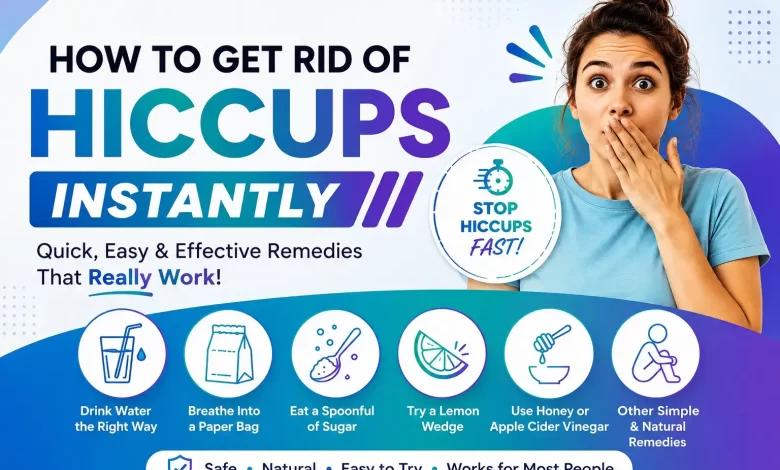
Over the years, people have tried countless remedies for hiccups — from drinking water upside down to holding their breath. Some methods work for certain people while others don’t. In this guide, we’ll explore science-backed and commonly used home remedies that may help stop hiccups quickly.
Interestingly, an American man named Charles Osborne holds the record for hiccupping continuously for 68 years, from 1922 to 1990. While this is an extremely rare medical case, it shows just how unusual hiccups can sometimes become.
Before learning how to stop hiccups, it’s important to understand what hiccups actually are and why they happen.
What Are Hiccups?
Hiccups are medically known as singultus or Synchronous Diaphragmatic Flutter (SDF).
According to Medline Plus a hiccup occurs when your diaphragm – the large muscle located beneath your lungs that helps with breathing – suddenly contracts involuntarily. This rapid contraction is immediately followed by the sudden closure of the vocal cords, producing the familiar “hic” sound.
Hiccups are often linked to irritation or stimulation of the:
- Vagus nerve
- Phrenic nerve
These nerves connect the brain to the diaphragm, throat, chest, and abdomen. When they become irritated, the diaphragm may spasm repeatedly, causing hiccups.
What Causes Hiccups?
There are many possible triggers for hiccups. Most are harmless and temporary, but some may be linked to underlying medical conditions.
– Common Causes of Hiccups
- Eating Too Much or Too Quickly: Overeating or swallowing food rapidly can cause the stomach to expand, irritating the diaphragm and triggering hiccups.
- Drinking Carbonated Beverages: Fizzy drinks release gas in the stomach, which may put pressure on the diaphragm and lead to hiccups.
- Excessive Alcohol Consumption: Alcohol can irritate the digestive tract and nervous system, increasing the likelihood of hiccups.
- Smoking: Smoking may irritate the diaphragm and cause excess air swallowing, both of which can trigger hiccups.
- Sudden Temperature Changes: Eating very hot food followed by cold drinks (or vice versa) may stimulate the nerves involved in hiccups.
- Emotional Stress or Excitement: Strong emotions such as anxiety, excitement, fear, or stress can sometimes trigger hiccups.
- Certain Medications: Some medications, including steroids, sedatives, and anesthesia drugs, may cause hiccups as a side effect.
- Abdominal Surgery: Surgery involving the abdomen or chest can temporarily irritate the diaphragm and surrounding nerves.
- Noxious Fumes or Irritants: Strong odors, fumes, or inhaled irritants may stimulate the nerves connected to breathing and trigger hiccups.
How to Get Rid of Hiccups Instantly
Hiccups usually go away on their own, but they can sometimes become frustrating and uncomfortable – especially when they happen repeatedly or last for several minutes. Most home remedies aim to calm the diaphragm, stimulate the vagus nerve, or regulate breathing patterns to stop the hiccup reflex.
Below are some commonly used remedies explained in detail with descriptions, step-by-step guidance, and trusted medical sources.
1. Hold Your Breath
Holding your breath is one of the most common and widely recommended remedies for hiccups. This method may help increase the amount of carbon dioxide in your bloodstream, which can encourage the diaphragm to relax and interrupt the hiccup cycle.
According to experts from the Cleveland Clinic and Mayo Clinic, breathing techniques that alter carbon dioxide levels may help stop temporary hiccups in some people.
– How to Do It
- Sit comfortably and relax your shoulders.
- Take a deep breath.
- Hold your breath for 10–20 seconds.
- Slowly exhale.
- Repeat 2–3 times if necessary.
– Why It May Work
- Increases carbon dioxide levels in the blood
- Helps relax diaphragm spasms
- Distracts the nervous system from the hiccup reflex
– Precautions
- Avoid holding your breath for too long.
- Not recommended for people with respiratory conditions unless advised by a doctor.
2. Drink Cold Water Slowly
Drinking cold water slowly may stimulate the vagus nerve and help reset involuntary diaphragm contractions. This is one of the simplest remedies and is often effective for mild hiccups.
The National Health Service (NHS) also mentions sipping cold water as a commonly suggested hiccup remedy.
– How to Do It
- Fill a glass with cold water.
- Sip the water slowly without pausing.
- Focus on controlled swallowing.
– Why It May Work
- Stimulates the vagus nerve
- Helps regulate breathing and swallowing
- May interrupt diaphragm spasms
– Additional Tips
- Some people find swallowing while plugging their ears more effective.
- Ice-cold water may work better for certain individuals.
3. Drink Water Through a Straw While Plugging Your Ears
This popular remedy combines swallowing with vagus nerve stimulation. Plugging the ears may stimulate nerve endings connected to the auditory system while drinking water helps regulate diaphragm movement.
Although research is limited, this method is frequently recommended in clinical discussions and home remedy guides.
– How to Do It
- Fill a glass with water.
- Plug both ears using your fingers.
- Drink the water slowly through a straw.
– Why It May Work
- Stimulates branches of the vagus nerve
- Combines controlled swallowing and nerve distraction
- May interrupt hiccup reflex signals
– Precautions
- Drink slowly to avoid choking.
- Avoid attempting this while lying down.
4. Breathe Into a Paper Bag
Breathing into a paper bag may help increase carbon dioxide levels in the blood, which could relax the diaphragm and stop hiccups.
The technique is commonly mentioned by healthcare professionals for temporary hiccup relief.
– How to Do It
- Use a small paper bag.
- Place it gently over your mouth and nose.
- Breathe slowly in and out for several breaths.
– Why It May Work
- Raises carbon dioxide levels
- Helps reset breathing patterns
- May calm diaphragm contractions
– Important Safety Tips
- Never place the bag over your entire head.
- Stop immediately if you feel dizzy or lightheaded.
- Avoid this method if you have heart or lung conditions.
5. Eat a Spoonful of Sugar
Swallowing granulated sugar is one of the oldest traditional hiccup remedies. The rough texture of sugar may stimulate the nerves in the throat and mouth, helping interrupt the hiccup reflex.
A small study published in the New England Journal of Medicine suggested that sugar may help relieve hiccups in some cases.
– How to Do It
- Take one teaspoon of granulated sugar.
- Place it on your tongue.
- Swallow slowly without chewing.
– Why It May Work
- Stimulates the vagus nerve
- Changes sensory signals in the throat
- Helps “reset” nerve activity
– Precautions
- People with diabetes should avoid excessive sugar intake.
- Avoid giving dry sugar to very young children due to choking risk.
6. Bite a Lemon Wedge
The intense sour taste of lemon may overstimulate sensory nerves in the mouth and throat, potentially interrupting the hiccup cycle.
This remedy is commonly used by bartenders and healthcare workers for sudden hiccups.
– How to Do It
- Cut a fresh lemon wedge.
- Bite into it gently.
- Suck the juice slowly.
– Why It May Work
- Stimulates the vagus nerve
- Distracts the nervous system
- Alters swallowing and breathing patterns
– Additional Tip
- Some people add a small amount of sugar to reduce the sourness.
7. Try Honey in Warm Water
Honey may soothe irritation in the throat while stimulating nerves connected to swallowing and breathing. Warm water may additionally help relax the diaphragm.
Honey is widely used in traditional remedies for throat irritation and mild spasms.
– How to Do It
- Mix one teaspoon of honey into warm water.
- Stir well.
- Sip slowly.
– Why It May Work
- Stimulates swallowing reflexes
- Helps calm irritated nerves
- Warm liquids may relax diaphragm muscles
– Precautions
- Do not give honey to children under one year old due to the risk of infant botulism.
8. Use Apple Cider Vinegar
Apple cider vinegar (ACV) contains a strong sour taste that may stimulate the vagus nerve similarly to lemon juice.
Although scientific evidence is limited, many people report temporary relief after using ACV.
– How to Do It
- Sip 1–2 teaspoons of apple cider vinegar slowly.
- You may dilute it in water if the taste is too strong.
– Why It May Work
- Strong taste stimulates throat nerves
- May interrupt hiccup reflex signals
- Encourages controlled swallowing
– Precautions
- Avoid excessive consumption.
- Undiluted vinegar may irritate tooth enamel and the throat.
9. Pull Your Knees to Your Chest
This position may compress the chest and abdomen slightly, helping relax the diaphragm and reduce spasms. It is a simple physical technique often recommended for temporary hiccup relief.
– How to Do It
- Sit or lie down comfortably.
- Pull your knees toward your chest.
- Hold the position for 1–2 minutes.
– Why It May Work
- Relaxes the diaphragm
- Reduces pressure around the chest
- Helps regulate breathing
– Precautions
- Avoid if you have recent abdominal injuries or surgery.
10. Gargle With Ice Water
Gargling ice water may stimulate nerves in the throat and disrupt the hiccup reflex. Cold temperatures may also help calm nerve irritation associated with hiccups.
– How to Do It
- Fill a glass with ice-cold water.
- Gargle for 20–30 seconds.
- Repeat if needed.
– Why It May Work
- Stimulates vagus nerve endings
- Changes breathing patterns
- Provides sensory distraction
– Precautions
- Avoid swallowing large amounts while gargling.
Final Thoughts
Hiccups are usually harmless, but they can quickly become irritating when they refuse to go away. Fortunately, many simple home remedies may help stop hiccups naturally and quickly.
Methods such as drinking water, holding your breath, eating sugar, or trying sour foods may stimulate the vagus nerve or regulate breathing patterns enough to interrupt the hiccup cycle.
However, if hiccups persist for more than two days or happen frequently, it’s important to consult a healthcare professional to rule out any underlying medical condition.
If you’ve discovered a remedy that works well for you, feel free to share it with others – sometimes the simplest tricks turn out to be the most effective.