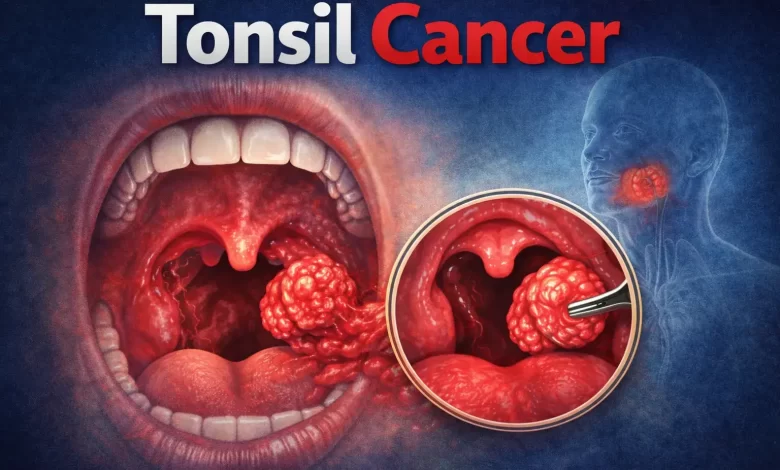
Cancer is a condition in which abnormal cells grow uncontrollably and may spread to surrounding tissues or other parts of the body. Among the different types of oral cancers, tonsil cancer – a form of oropharyngeal cancer has become increasingly recognized worldwide. Understanding its causes, symptoms, and treatment options is essential for early detection and improved outcomes.
This medically reviewed guide explains tonsil cancer in simple, evidence-based terms to help you recognize warning signs and seek timely care.
In this article, we will discuss about Tonsil Cancer. What are the symptoms, diagnosis and the treatment of this condition?
What Are Tonsils?
It is quite common for people to ask “What are Tonsils?” and which is quite obvious because people can neither see nor relate to the functionality of tonsil in a human body.
Tonsils are the two oval-shaped lymphatic tissues located at the back of the throat. They work as defense players. They help keep your body away from the disease. Otherwise called “palatine tonsils,” they help the body perceive and guard itself against germs.
There are three Types of Tonsils:
- Pharyngeal Tonsils, also known as Adenoid, which resides right behind your nose.
- Palatine Tonsils (generally what most people are found referring to when they hear the word ‘tonsils’), these are said to be located on both sides of the back of the throat.
- Lingual Tonsils, which are located at the back of the tongue.
Although tonsils contribute to immune defense, their cells can sometimes undergo abnormal changes that lead to cancer.
Yes, It is our first defense against infections!
Tonsils are the first protective barriers of our body, that protects us from the foreign particles that we ingest or inhale through the mouth or nose, respectively.
The moment, bacteria or viruses are trapped in the tonsils, they are transported to the lymphatic nodes where the fighter cells (immune cells) fight against them.
However, some individuals have enlarged tonsils(called tonsillitis) and they may see following listed issues:
- The ability to hear goes down
- Chronic infections related to ear
- Frequent tonsillitis or sinus related infections
- Frequent nose bleeding
- Abnormal speech delivery or difficulty in swallowing food
- Obstructive sleep apnea
Anyways coming back to the topic we decided to talk about!
What is Tonsil Cancer?
Tonsil cancer is a form of oropharyngeal cancer that develops in the tissues of the tonsils. It most commonly arises from the lining cells of the tonsils and is usually classified as:
- Squamous Cell Carcinoma (most common)
- Lymphoma (less common)
Around 3.5% of every single oral disease create in the tonsils or the oropharynx—the back some portion of the throat—as per the National Cancer Institute’s Surveillance, Epidemiology and End Results database.
Human papilloma infection (HPV) is another real reason for one type of tonsillar malignancy, called squamous cell carcinoma.
In most cases, tonsil cancer is squamous cell carcinomas (SCC), which occur in the lining tissues of the mouth. SCC often occurs in the lymphoma cells (immune system cancer) of the tonsils too (in rare conditions).
Causes and Risk Factors of Tonsil Cancer
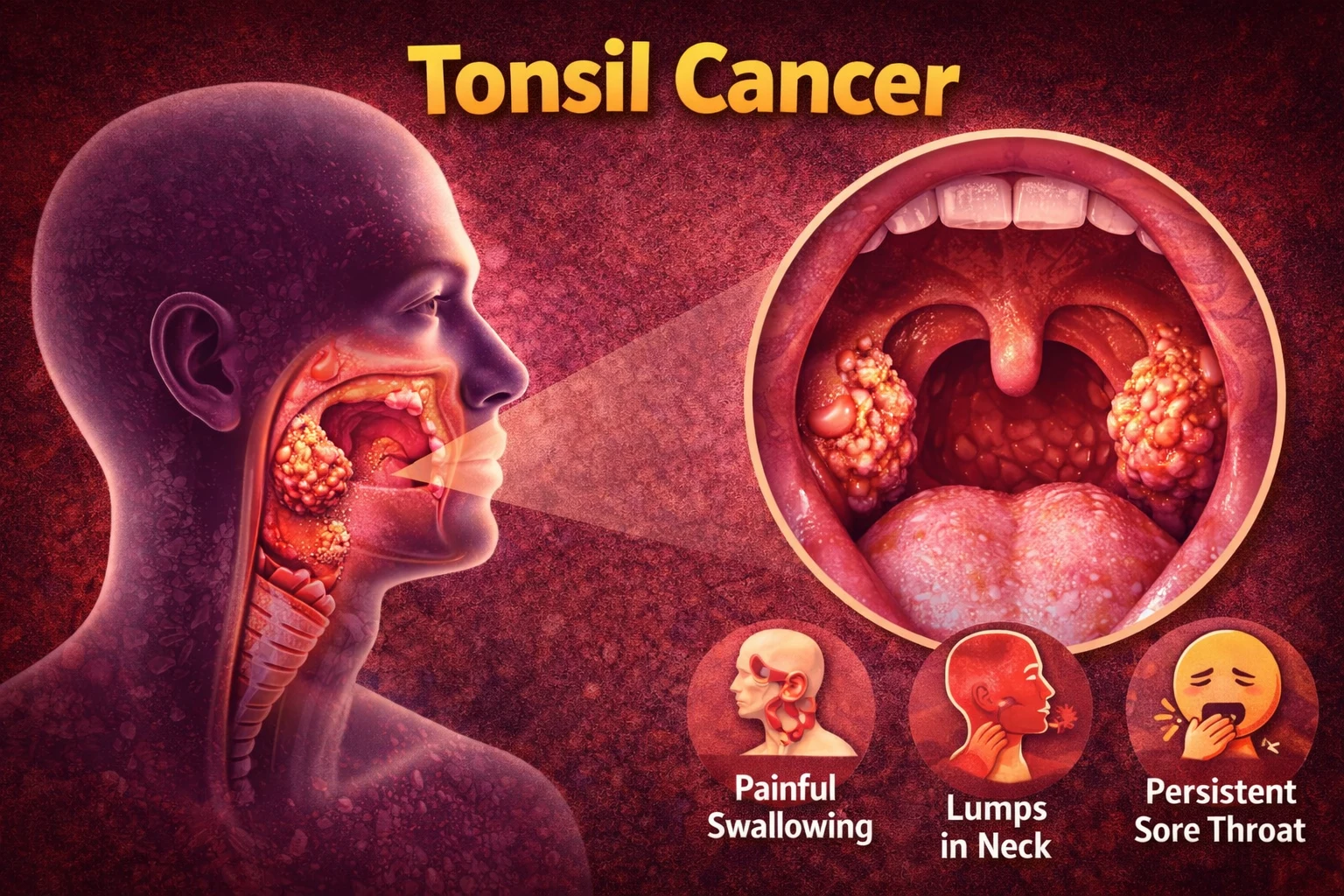
The exact cause of tonsil cancer is not always known, but several risk factors increase the likelihood of developing the disease.
— Major Risk Factors
- Tobacco: Smoking cigars, cigarettes or pipes and using chewing tobacco.
- Alcohol: Drinking excessive amounts of alcohol has got a strong connection with throat cancer.
- Viruses: Exposure to certain strains, particularly 16 and 18 of human papillomavirus (HPV) is associated with oropharynx cancer. This virus is quite common, and it has got a strong association with intimate sexual contact.
- Exposure to radiation in the past: Exposure to radiations for a longer period of time (as a part of an ongoing treatment) increases the chance.
- Genetic factors
- Certain foods: Deficiencies of some vitamins
- Poor oral hygiene
- Immunocompromised conditions such as AIDS.
Age: Tonsil cancer can occur at any age, whether you are at the age of sweet 16 or in late 50’s.
Gender: Men are more prone to tonsil cancer.
Signs and Symptoms Of Tonsil Cancer
Early symptoms can be mild and may resemble common throat infections, which is why persistent symptoms should not be ignored.
— Signs of Tonsil Cancer
- Sore throat does not heal irrespective of continuous medication and precautions.
- Swollen tonsils. ( where one is especially bigger than the other.)
- Throat pain that never goes away
- Blood-tinged saliva
- Continuous earaches (Ear Infections)
- Difficulty while swallowing food.
- Pain while consuming citrus fruits, like oranges, lemon etc.
- You can feel a lump in the neck.
- Continuous neck pain.
- Poor/ Bad breath all the time.
- Hoarse voice.
- A patchy, dry and irritated tissue.
How Tonsil Cancer Is Diagnosed
Early diagnosis involves a combination of medical history, physical examination, and specialized tests.
1. Obtain Medical History
History taking is the first step. Below are the questions that you may expect your doctor to ask you for taking a detailed history.
- For how long has the problem been prevailing?
- Is your condition deteriorating, better or remaining the same?
- Have you taken any medication for the same?
- Do you experience any pain?
- Do you feel any lumps in your neck?
- Are you experiencing any issues with hearing?
- Do you have any lumps or bumps anywhere else in your body?
- Are you experiencing weight loss?
- Do you have any other medical problem?
- Have you undergone any surgery before?
- Are you allergic to any medicine?
- Have you ever been exposed to radiation before?
- Does the disease run in your family?
2. Physical Examination
After taking a complete history, the doctor will ask about symptoms, smoking or alcohol use, past illnesses, and family history. The throat, mouth, neck, ears, and nose are examined carefully for abnormalities or lumps.
— Some of the Steps Perform by the Doctor:
- He will look for any abnormality inside your mouth.
- He will thoroughly examine your neck for any lump.
- Examine your ears.
- Examine the front of your nose.
- He may ask you to move your face, lift the shoulders.
- May ask you to follow his or her fingers around with your eyes.
- Perform some hearing tests.
3. Diagnostic Tests
If cancer is suspected, additional tests may include:
- Biopsy – Removal of tissue for microscopic examination (definitive diagnosis)
- Fine needle aspiration (FNA) – Sampling cells from neck lumps
- Imaging tests such as CT scan, MRI, or PET scan to determine tumor size and spread
- Blood tests for general health assessment
4. Stages of Tonsil Cancer
Cancer staging describes how far the disease has spread and helps guide treatment decisions.
| Stage-1: | Tumor (cancer) is little (under 2 cm), is bound to one territory, and has not yet involved the surrounding lymph nodes. |
| Stage 2: | At this stage, Cancer grows a bit (about 2-4 cm) but it has not involved the surroundings yet. |
| Stage 3: | It’s an Alarm! Tumor becomes bigger(4 cm in size) and has involved one of the lymphatic nodes on a similar side of the neck as that of the tumor. |
| Stage 4: | It is the most advanced stage and has the most terrible prognosis.
|
Treatment Options for Tonsil Cancer
Treatment depends on the cancer stage, tumor size, patient health, and whether the cancer is HPV-related.
1. Surgery
Surgical removal of the tumor is often the primary treatment in early-stage disease. In some cases, affected lymph nodes in the neck may also be removed.
2. Radiation Therapy
High-energy radiation is used to destroy cancer cells. It may be used:
- After surgery to eliminate remaining cancer cells
- As the main treatment in certain cases
- In combination with chemotherapy
3. Chemotherapy
Chemotherapy drugs kill cancer cells throughout the body and are often used for advanced stages (Stage 3 or Stage 4) or combined with radiation therapy (chemoradiation).
4. Targeted Therapy / Immunotherapy
Newer treatments may target specific cancer cell pathways or stimulate the immune system to attack cancer cells. Treatment plans are individualized and determined by oncology specialists.
Treatment plans are individualized and determined by oncology specialists.
Conclusion
Tonsil cancer is a serious but treatable condition, especially when diagnosed early. Awareness of symptoms such as persistent sore throat, difficulty swallowing, and unexplained neck lumps can lead to timely medical consultation and early treatment.
Understanding risk factors—particularly smoking, alcohol use, and HPV infection—helps individuals take preventive steps. With modern diagnostic tools and treatment approaches, many patients achieve successful outcomes and long-term survival.
If you notice persistent throat or neck symptoms lasting more than two weeks, consult an ENT specialist or healthcare provider for proper evaluation.
We would love to hear your stories about Tonsil Cancer (If any) or your suggestions and feedbacks, write to us in the comment section below.
Some FAQ’s About Tonsil Cancer
What are tonsils?
What raises the danger of tonsil disease?
Will you have tonsil tumor and no tonsils?
What are the side effects of tonsil malignancy?
At later stages, there are extended lymph hubs or sores in the neck and perhaps ear torment. When in doubt, at whatever time somebody is thought to have a tonsil disease and anti-infection agents don’t work, specialists ought to consider tonsil tumor.
Commonly tonsil malignancy that has metastasized or spread to lymph hubs is mixed up for a kind pimple called a branchial parted blister, which once in a while creates in youngsters. In grown-ups, it’s more typical that the growth is truly metastatic tonsil malignancy.
How is tonsil malignancy analyzed?
What is the standard treatment for tonsil disease?
In cutting-edge cases, we utilize chemotherapy with the radiation treatment.